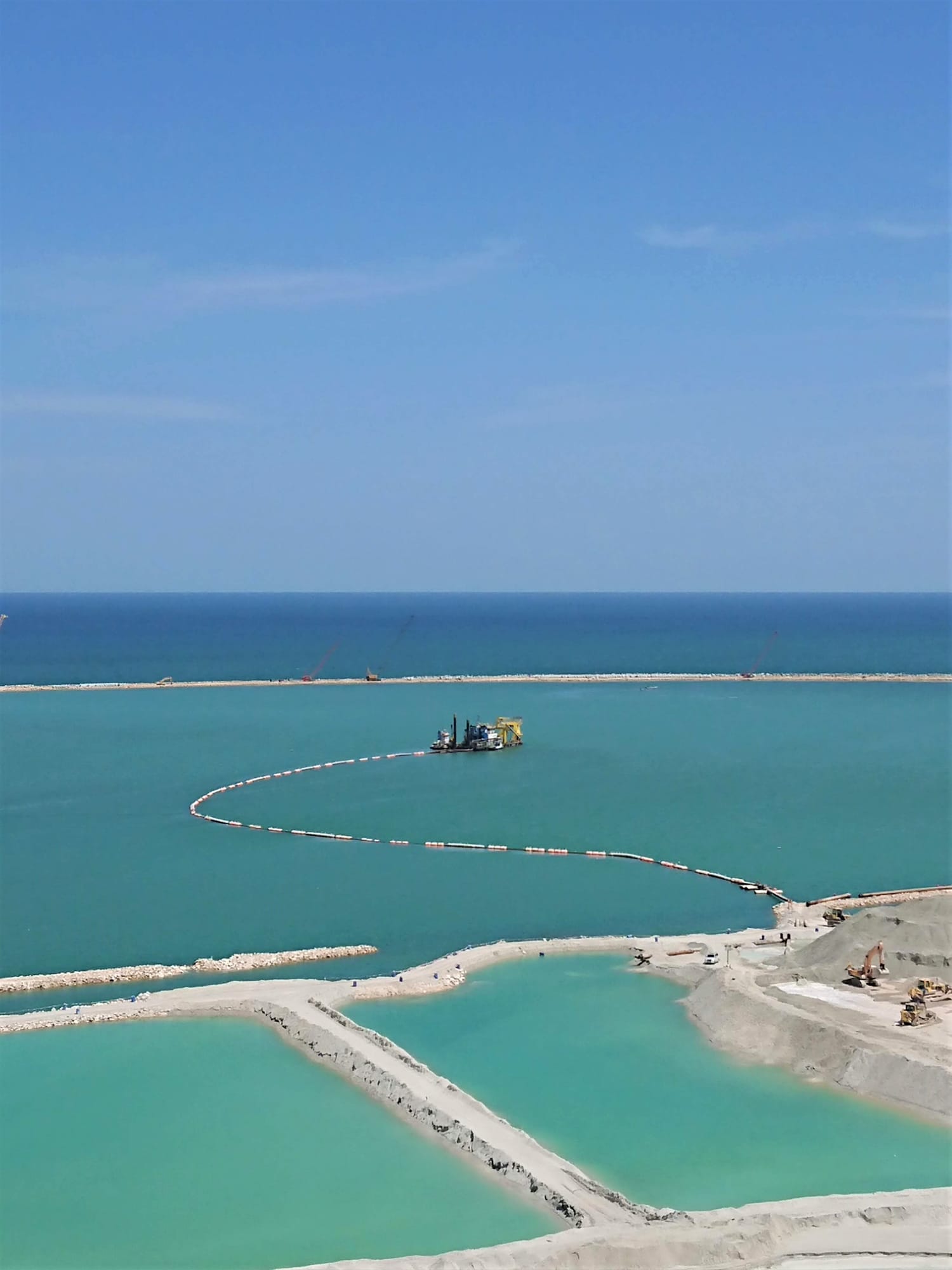
If you own or operate a port, marina or waterfront in the UAE, you will have to plan dredging at some point. The first decision is whether you need capital dredging, which creates new depth, or maintenance dredging, which restores depth you have lost. The two can look alike on paper, but they differ in survey work, equipment, approvals and budget. Here is how to tell them apart.
Capital dredging and maintenance dredging use much of the same equipment, so they are easy to confuse. But they solve different problems, they are planned differently, and they belong in different parts of your budget. Getting the distinction right early makes the conversations with consultants, authorities and contractors a lot shorter.
Gulf Cobla has carried out both types of work since 1977, when we started on the capital dredging of Jebel Ali Port. This is how we explain the difference to clients.
What is capital dredging?
Capital dredging creates something that was not there before. A new harbour basin, an access channel, a deeper berth for larger ships, a trench for a pipeline or a power cable. It is usually a one-off project tied to a new development or a major upgrade.
The material is normally undisturbed seabed. That can mean compacted sand, clay, or harder layers that have been in place for a very long time. Because nobody has dug there before, the ground conditions are not fully known until they are investigated, and that uncertainty shapes the whole project.
A few examples from our own record:
Jebel Ali Port, Dubai (1977 to 1982): more than 100 million m³ of capital dredging for what became the world’s largest man-made port.
Qarin Al Aysh Channel, Abu Dhabi (1998 to 2002): a 19 km channel, with 9.5 million m³ moved.
NEOM Sindalah Island, Saudi Arabia (2021): a new access channel and marina basin, around 0.6 million m³.
What is maintenance dredging?
Maintenance dredging gives you back depth you already had. Once a channel or basin is built, sediment starts to settle in it, carried in by currents, tides and wind-blown sand. Little by little the water gets shallower until vessels can no longer use the berth safely at its design depth.
The material here is usually loose and recently deposited, so it is easier to remove than virgin seabed. The work is also recurring. How often it is needed depends on the site: how exposed it is, how the water moves through it, and how much depth margin the vessels using it require. Some basins need attention every few years, others much less often. Only regular surveys will tell you which group yours falls into.
In practice, the line between the two types is not always clean. At Port Rashid Marina in Dubai (2015 to 2017), our work combined maintenance with deepening, so the berths could take cruise vessels. Part of that job restored lost depth and part of it created new depth.
The difference at a glance
Capital dredgingMaintenance dredgingPurposeCreate new depth or a new waterwayRestore the original design depthMaterialUndisturbed seabed: compacted sand, clay, harder layersLoose, recently settled sedimentHow oftenOnce, for a projectRepeated over the life of the assetSurvey basisSite investigation plus bathymetric surveyRepeat bathymetric surveys against the design depthBudget lineProject capital costRecurring operating cost
Why the difference matters when you plan
The survey work is different. For a capital project, you need to know what the seabed is made of before anyone can choose the right equipment or price the job with confidence. For maintenance, the main question is how much depth has been lost and where. That comes from comparing a new bathymetric survey with the design depth. Our survey department runs multibeam (MBES) survey vessels for this kind of work, before, during and after dredging. You can read more on our survey services page.
The equipment has to suit the material. Cutter suction dredgers cut into the seabed with a rotating cutter head and pump the material through a pipeline. That makes them well suited to compacted ground and to jobs where the material has to travel some distance. Gulf Cobla’s fleet is built around this type of vessel, from Khaleej Bay (7,000 hp, 18 m dredging depth) for large capital works to smaller units such as Jumeirah Bay (1,200 hp) for tighter areas.
The material has to go somewhere. Capital dredging often produces large volumes of sand that can be reused. On the Sobha Al Siniya project in the UAE (2024 to 2026), dredging and land reclamation run side by side, with 8.4 million m³ in scope. Maintenance material is often finer and smaller in volume, so it may be better placed at a designated offshore location. We can pump material ashore through floating or submerged pipelines, place it straight onto a beach, or carry it by split hopper barge.
Approvals take time. Both types of work need permits from the relevant port and environmental authorities. A capital project, which changes the seabed for good, should be expected to need a more detailed environmental review than a routine maintenance campaign. Build that time into your programme from the start.
The budget should plan for both. A new marina or berth is a capital project. Keeping it at depth is an operating cost that comes back for as long as the asset is in use. Owners who plan a maintenance programme at the design stage avoid a nasty surprise a few years after opening.
Signs your berth or marina needs dredging
Vessels are waiting for high tide to enter or leave.
Pilots or the harbour master have started restricting draught.
Your latest survey shows depths below the design level, especially at entrances and in corners where water moves slowly.
Larger vessels are planned for the berth. That is no longer maintenance. It is a deepening job, and should be treated as capital dredging.
What to have ready before you speak to a contractor
You do not need every answer, but these will speed things up:
The depth you need, and the largest vessel it has to serve.
Your most recent survey, with its date.
Any ground investigation data, for capital works.
Where the material could go: reuse on site, reclamation, or offshore placement.
Operational limits, such as berths that must stay open during the work.
Talk to us about your project
Across nearly five decades, Gulf Cobla has completed 255 recorded dredging contracts in the UAE, Saudi Arabia, Qatar, Bahrain, Oman, Jordan, Iraq and the Maldives, moving around 400 million m³ of material. Whether you are planning a new basin or need to get an existing one back to depth, our team can help you scope it properly from the first survey.
See our dredging services, browse our projects, or contact us to discuss your requirement.